|
This website provides awareness level information to the fire service on traditional and modern wood products used in residential construction. These publications were developed under a cooperative agreement between the Department Homeland Security’s United States Fire Administration and the American Forest & Paper Association.
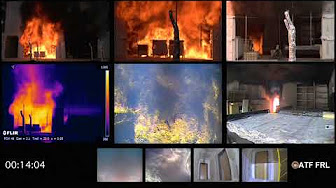
As with all types of structural framing exposed to fire, the intensity of the fire load varies from incident to incident, as do the construction materials and details. This results in performance which is unpredictable under fire conditions.
Because each fire is unique, each building is constructed differently and contents are varied the failure of structural components and systems will be initiated by any number of items. These include but are not limited to: loss of strength of framing members, sheathing burn-through, loss of member bracing, or failure of connections or supports, etc. |
 |
 |
Therefore, it is vital that firefighters educate themselves with all construction materials, methods of construction and maintain a constant awareness of conditions that are present during fire ground incidents to ensure safe operations.
The National Institute of Occupational Safety and Health (NIOSH) provides a Fire Fighter Fatality Investigation and Prevention Program. In addition to the incident investigations, NIOSH provide recommendations to prevent similar incidences from occurring. This information may be valuable as an educational aid of lessons learned.
Note: Light frame construction is defined1 as:
Light frame construction, n: any method of construction utilizing
dimension lumber joists, MPC trusses, MPCMW trusses, steel bar joist
trusses, wood I-joists, or composite wood joists as floor or roof
system structural elements.
1. National Engineered Lightweight Construction
Fire Research Project – Technical Report: Literature Search & Technical
Analysis, Kirk Grundahl, National Fire Protection Research Foundation
Report, 1992 - www.sbcindustry.com/firepro.php.
|